How Somatic Therapy Supports Recovery from Disordered Eating
Recovery from disordered eating isn’t just about changing behaviors around food. It’s about healing your relationship with your body—and that healing can’t happen in the mind alone.
Somatic therapy is a body-based or “bottom-up” approach to mental health that helps people reconnect with their body, regulate the nervous system, and process trauma stored in the body. At Guerin Therapy Group in Raleigh, we offer somatic, weight-inclusive care to support embodied recovery from disordered eating, eating disorders, and body dysmorphia.
What Is Somatic Therapy?
Somatic therapy integrates the mind and body in the healing process. While traditional talk therapy focuses on thoughts and feelings, somatic therapy invites you to notice sensations, body awareness, and nervous system responses (i.e. fight, flight, freeze).
It’s especially helpful for people who:
- Feel disconnected or numb from their body
- Experience high anxiety or hypervigilance
- Struggle with self-trust and body image
- Have a history of trauma or ongoing stress
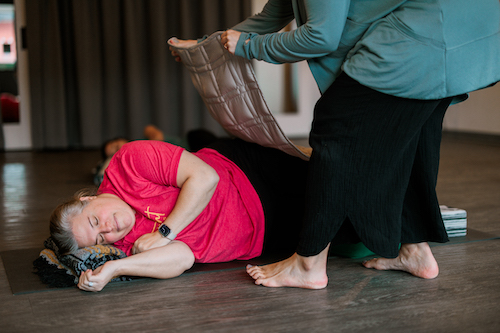
Somatic therapy can include grounding practices, movement, breathwork, mindfulness, parts work, and gentle tracking of bodily sensations—all done at your pace. Our therapists are skilled at holding space for your processing, without an agenda or pressure.
Why Is Somatic Therapy Helpful for Disordered Eating?
Disordered eating often develops as a way to cope with distressing feelings, trauma, or dysregulation. In Embodied Recovery for Eating Disorders, we say “eating disorders are an expression of dysregulation of the body.” The body becomes a battleground—something to control, numb, or ignore. Somatic therapy helps to understand what is happening so that we can shift that dynamic.
Here’s how it supports recovery:
1. Rebuilding Body Trust
Many people with disordered eating have learned to override hunger cues or ignore discomfort. Somatic therapy helps you slowly reconnect with your body’s signals—not just around food, but also safety, boundaries, and emotions.
Through gentle awareness practices, you begin to ask:
- What is my body telling me?
- What does safety feel like? What does threat feel like?
- What do I need right now? What do I want right now?
Listening and attuning are foundational to healing.
2. Regulating the Nervous System
As we mentioned above, disordered eating behaviors are linked to nervous system dysregulation—like fight, flight, freeze, or fawn responses. You may feel stuck in cycles of anxiety, shame, or over-control.
Somatic therapy offers tools to:
- Recognize what state your nervous system is in
- Use embodiment practices to move through the stress cycle
- Use grounding techniques to come back to the present
- Cultivate a sense of safety and self-regulation
As your nervous system finds more stability, the urge to use eating disorder behaviors often softens.
3. Processing Trauma Without Retelling the Story
Many clients come to us with trauma histories, including weight stigma, bullying, medical trauma, or identity-based harm. These experiences live in the body—and don’t always respond to talk therapy alone. In fact, sometimes talking about a traumatic experience without enough tools, can be re-traumatizing.
Somatic therapy allows you to process trauma more gently by tuning into the body’s cues rather than retelling the entire story. This can be especially supportive for those who have felt worse after re-telling their body or other styles of talk therapy.
4. Supporting Identity, Agency, and Embodiment
In a culture that teaches us to objectify or monitor our bodies, somatic therapy invites you to inhabit yours again—with compassion and curiosity. It’s a practice of embodiment: feeling as if you are inhabiting your own body.
We support clients in exploring:
- Identity (race, gender, age, etc)
- Body image
- Size inclusivity
- Body automony
- Pleasure, rest, and reclaiming joy in movement, and more
This approach honors all bodies and all identities—without pathologizing or pushing for weight loss.
Our Approach at Guerin Therapy Group
Our therapists are trained in somatic, trauma-informed, and weight-inclusive care. We believe healing happens when you’re met with a calm, embodied presence, consent, and nonjudgment—and when your body’s wisdom is honored, not ignored or questioned.
Whether you’re just starting to explore recovery, have been in treatment before, or are trying to move beyond food behaviors and into deeper healing—we’re here to walk with you.
Ready to Reconnect with Your Body?
If you’re looking for disordered eating support that goes beyond food plans and into the root of what your body is holding, somatic therapy may be the missing piece.
We’re based in Raleigh, NC and offer in-person sessions, as well as virtual sessions for all North Carolina residents.
Click here to book a free consultation to get matched with a therapist who fits your needs.


